What I do to get better sleep at night...
The good news though, is that over time I’ve developed ways to overcome my insomnia and in today’s post, I’d like to share the methods and habits that have helped me finally consistently get a proper night’s sleep.

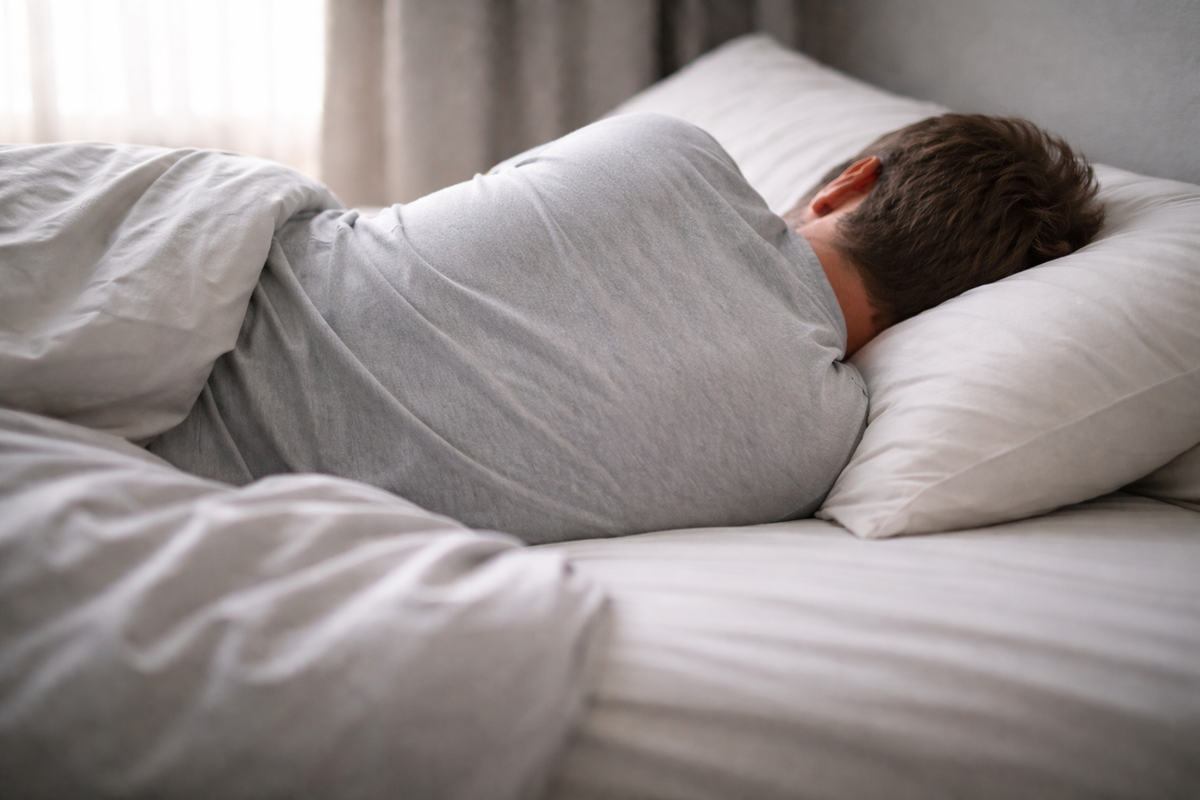
The struggle to cross that invisible line between being awake and falling asleep.
Have you ever felt tired and sleepy at bedtime and think oh nice, I can go to bed now and get a good night's sleep, you lie down feeling hopeful, tonight will be different, you think. Your body agrees, BUT you mind does not.
The moment you lie down, your mind starts to race, starts to think of the things that happened during the day or about what's going to happen tomorrow. As hard you try, you are unable to shut down those thoughts, and as tired as you are, you find yourself unable to cross that invisible line between being awake and actually falling asleep.
Sleepy but alert and awake at the same time.
I have found myself trapped in this frustrating state countless times; sleepy, heavy-eyed, and drained, yet somehow still unable to sleep.
I sink my limbs and body into the mattress. My breathing slows. I keep yawning. And yet my mind keeps a light on, like a stubborn guard refusing to end its shift. Thoughts drift in, not urgent, not important, but persistent. Conversations from years ago. Tasks that don’t matter until morning. Imaginary futures. Half-formed worries with no clear shape, all with no reason for me to think about them at all, at least not at this time, when I am about to sleep.
I turn from one side to the other, searching for the exact position that might unlock sleep, as if there’s a hidden angle I’ve missed. There never is. Laying on my left doesn't work, so does laying on my right or my back.
And I noticed that ....
The Pressure to Sleep Makes It Worse
Insomnia feeds on pressure.
The moment I tell myself, I need to sleep, sleep seems to move even farther away. Minutes begin to feel unbearably loud. I start doing the maths in my head, how many hours I will get if I fall asleep now, then how many if it takes another ten minutes, then another twenty.
Time slowly turns into the enemy.
The harder I chase sleep, the more awake my mind becomes. It is like trying to hold water in a clenched fist. The tighter I grip, the more it slips away. I close my eyes tighter, trying to force the thoughts out, trying desperately to shut my mind down, but somehow that effort only keeps me awake.
Night Has a Different Voice
I never have a problem taking a snooze in the afternoons though. I fall asleep the moment I lay on my bed and close my eyes in the afternoon. Strangely, this never happens at night. I spent much time thinking about the reasons for this and have come to the conclusion that it is the expectation and pressure of sleeping at night.
I have grown to expect to sleep and sleep easily at night and when it doesn't happen, pressure and stress builds up. During the day, I have no expectations or pressure to sleep, I just know that I am sleepy and I lie in bed and fall asleep, it is that’s easy and straight forward.
The Good news is that I have overcome my insomnia
The good news though, is that over time I’ve developed ways to overcome my insomnia and in today’s post, I’d like to share the two methods and habits that have helped me finally consistently get a proper night’s sleep.
If you struggle with occasional insomnia, as I once did, I hope some of these approaches can help you too.
(Just a gentle note: this is not medical advice. These are the simply things I personally tried that helped me with my own sleep struggles. If your sleep problems are persistent or concerning, it is always a good idea to seek professional medical advice.)
The Sleep Reset
One of the things I did was reset my circadian rhythm. After too many late nights and too little sleep, my body clock had drifted badly out of sync. Day and night no longer felt connected to the natural rhythm they were meant to follow, and deep down, I knew I had to guide my body back into alignment with light and darkness once again.
If you are anything like me, and have spent far too many nights lying awake while surviving on only a few hours of sleep, then resetting your circadian rhythm may be one of the first things worth trying, something I will talk about as “method two” below.
For myself, I used both a mental and physical approach to pull my sleep back into place. To begin with, I will suggest the mental method first, because for some people, this alone may be enough to help them sleep well again.
For others, overcoming insomnia may require a combination of both the mental and physical method.
Method One (The Mental approach): Learning Not to Fight.
Over time, I’ve learned something uncomfortable but true: fighting insomnia usually makes it stronger.
The nights that go best aren’t the ones where I try hardest, but the ones where I loosen my grip. When I stop demanding sleep and start allowing myself to rest, when I closed my eyes without expectation, when I let thoughts pass without arguing with them.
Sometimes I remind myself: Being awake is not dangerous, even if there is only 4 hours left to sleep, tomorrow will still come. That acceptance takes the edge off. When I remind myself that I cannot stop or slow down time, my body eases and relaxes even further.
Sometimes, a little reverse psychology can help too. Instead of fighting the insomnia, try leaning into it. Tell yourself; Alright then, looks like I won’t be sleeping tonight, and that’s okay. Welcome the sleeplessness instead of fearing it. Say to your mind; Come on then, insomnia, let’s spend the night together. I’ll keep you company.
Strangely enough, the moment you stop battling sleep so desperately, your mind often begins to loosen its grip.
When you become unafraid of insomnia, your mind can start to let go and sometimes even with this one thought, your mind will let go and you may fall asleep within a few minutes.
Summary of method one: Learn not to fight, let sleep come or NOT come, it doesn't matter, you are not afraid.
Method Two (The Physical approach): Getting your Circadian rhythm back on track. Wake up a lot earlier in the morning and get sunlight in your eyes and on your skin.
This is the method I used to get my circadian rhythm back on track and it may be something you can try although it may feel almost impossible to do, when you barely slept the night before.
Start with waking up earlier the next day, as early as you can. Try 4, 5 or 6am. Then go for a brisk walk and let your lungs breathe in the cool morning air, still fresh and untouched by the fumes and noise of the day ahead.
Let your eyes witness the Sun rise. And even if the Sun has already risen, still go outside and soak in the morning light. That early sunlight helps reset your circadian rhythm by telling your mind and body that it is the morning.
When I was trying to get my own circadian rhythm back on track, I set my alarm for 4.30am and forced myself out of bed the moment it rang. I remember barely sleeping three hours, but I still made myself get up, go outside, let the sunlight reach my eyes, and let my skin soak in the sunshine.
There were two reasons I did this, and why I believe it may help you too. The first, as I mentioned earlier, was to expose myself to the morning Sun and let that early light enter my eyes. It was my way of resetting my circadian rhythm, of reminding my mind and body that this is morning, this is the beginning of the day.
Part of method two, is to skip the afternoon nap.
The second reason for waking up so early was simple: I wanted to be genuinely tired by the end of the day. During this phase of resetting your circadian rhythm, it is important not to nap in the afternoon, no matter how tempting or tired you may feel. The idea is to wake up at 5am and remain awake all the way until bedtime that night. So if you plan to sleep at 9pm, you would have been awake for a full sixteen hours. By then, your body should feel deeply and naturally exhausted, the kind of tiredness that sleep rarely resists.
I think you may have noticed the two-pronged attack on insomnia in this second method. The first is to reset your circadian rhythm. The second is to make yourself deeply and naturally tired.
With your mind beginning to recognise once again that darkness means night, and night means sleep, and with your body carrying the honest exhaustion of having been awake since 5am, sleep should start to come much more naturally.
I did this for seven days in a row. I woke at 4am each morning, went outside into the early light, and stayed awake all the way until bedtime without napping. By the third day, I was naturally feeling sleepy by 9pm and falling asleep by around 10.30pm.
That was when I realised my circadian rhythm had begun to reset itself. I knew it because I no longer needed to force myself to wake at 5am. Even without doing so, my body would naturally start feeling sleepy again by around 9:30 at night.
Go back to Method One
If, even after trying everything I suggested in Method two, you still find yourself unable to sleep, then bring back in the first method I mentioned earlier: reverse psychology.
Tell your mind: I have insomnia tonight and I probably will not sleep. That is alright. I am looking forward to a night of not sleeping.
Almost welcome the insomnia in. Sit with it instead of fighting it. Say to yourself: Alright then insomnia, let us spend the night together. I will keep you company.
Do not force yourself to sleep. Do not chase it. The strange thing about sleep is that it often arrives only when you stop hunting for it. The moment the pressure disappears, the mind begins to loosen its grip, and sleep tends to come far more easily.
Even though I sleep much better these days, I still wake up early, sometimes as early as 4am.
Why do I continue doing this? For one simple reason: to keep my circadian rhythm steady and aligned with the natural cycle of day and night. I have found that waking early helps anchor my body clock, preventing it from slowly drifting back into old habits.
So if methods one and two have helped you begin sleeping better again, I would encourage you to continue waking up early as well. Think of it as maintaining the rhythm you worked so hard to restore.
Besides helping me maintain my circadian rhythm, I have learnt that waking up early brings many unexpected gifts with it:
- The world is still quiet at that hour. Most people are asleep, and there is a certain peace in the darkness before dawn. I have found it to be the best time of day to think, to work, and to write.
- If you live in a dense city like I do, the air outside at that time of morning still feels fresh, sweet and untouched, free from cigarette smoke, traffic fumes, and the noise of the day ahead. It is the perfect time for a brisk walk or a run.
- But perhaps the greatest gift of all is time itself. Depending on how early I wake, I gain an extra two to four hours each day. And when you begin adding those hours together, the numbers become astonishing.
If I gain just two extra hours a day for an entire year:
2×365=730
That gives me an extra 730 hours a year.
Which is roughly an extra 30.4 days. Nearly an entire extra month of time to do what I want to do each year!
Summary:
In the end, overcoming insomnia for me came down to two things: removing the fear of not sleeping and resetting my body. There is the mental part as well as the physical part;
The physical side was about resetting my circadian rhythm. I forced myself to wake early, exposed myself to the morning light, stayed awake throughout the day without napping, and allowed my body to become naturally tired again by nightfall. After several days of doing this consistently, my body slowly remembered when it was supposed to sleep.
The mental side was just as important. I realised that the harder I chased sleep, the more impossible it became. Insomnia fed on pressure, fear, and desperation. So instead of fighting it, I stopped resisting it. I used reverse psychology, telling myself that it was alright if I did not sleep, even welcoming the insomnia instead of fearing it. The moment I removed the pressure to sleep, my mind began to relax, and sleep started returning naturally.
For me, insomnia was not defeated by force. It was overcome by acceptance, letting go, and physical exhaustion.
I wish you all the best if you do try any of the methods I suggested above.
Jerome