The Words My Father Left Behind
I grew up in a home filled with conflict and criticism. As a child, I believed the hurtful words spoken to me, and those doubts stayed with me long into adulthood. In this personal reflection, I write about the lasting impact parents can have on their children through words alone.

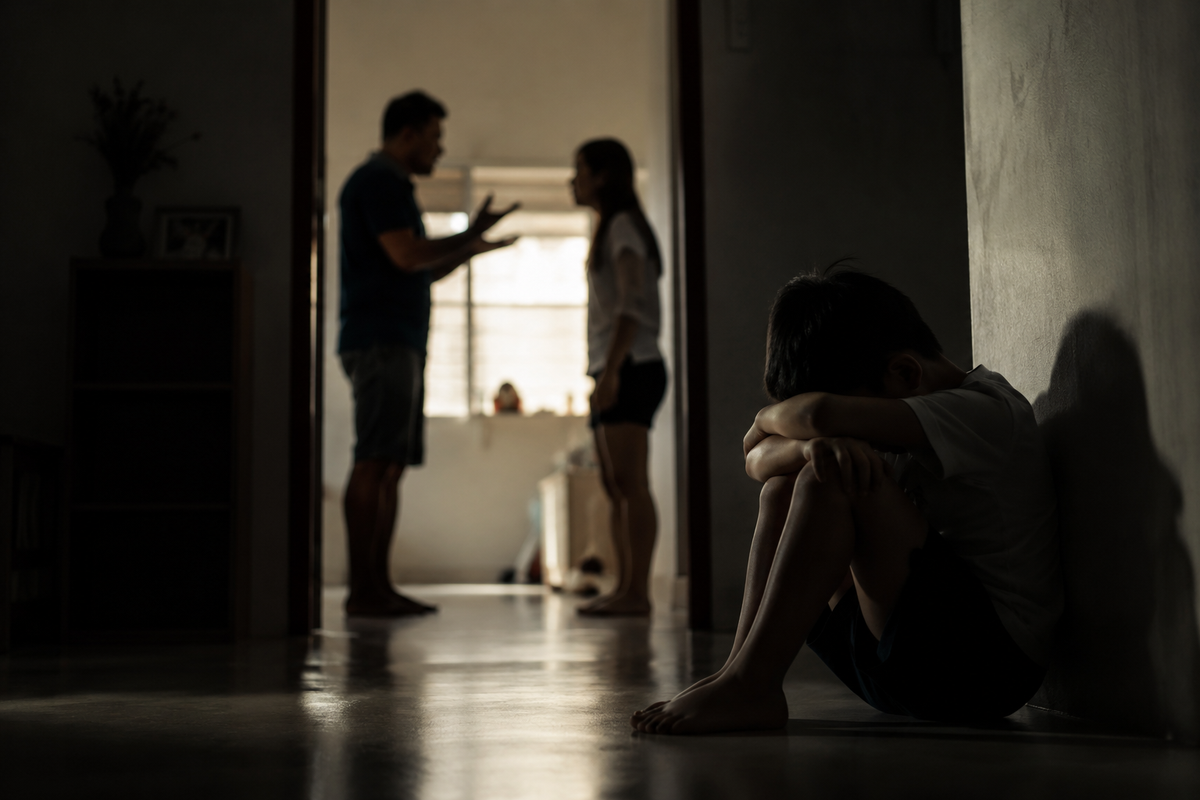
I come from a broken family. My parents divorced when I was in my early teens, but long before that, our home had already been consumed by daily arguments and quarrels. Conflict was such a constant presence in my childhood that it became the only version of family life I knew...
When I entered primary school, my textbooks were filled with pictures of smiling parents and happy children gathered around dinner tables. I remember staring at those images and wondering why my own family was so different from everyone else’s.
My parents did not get along. They fought almost every time they saw each other, and even at six or seven years old, I remember wondering why they had ever come together in the first place.
My father only came home two or three times a week. He often seemed angry, and he shouted at my brother and me frequently. Threats of beatings were a constant part of our childhood, and they were never empty. More often than not, when he said he would hit us, he did.
I do not remember receiving calm advice or gentle guidance from him. Most of the words I remember hearing were insults, put-downs, or threats, especially directed at me. I have often wondered why he was so harsh towards me. Perhaps it was the result of his own difficult childhood, pain being passed down from one generation to the next.
Even now, I still remember how quickly he dismissed anything I tried to share with him. If I told him something new I had learned, his answer was almost always the same.
“Dad, you can cook an egg in an oven.”
“Rubbish.”
“Dad, I can hold my breath underwater for five seconds.”
“Rubbish.”
Those small moments may seem insignificant, but as a child, they hurt deeply. I was not looking for applause or admiration. I simply wanted my father to listen, to smile, or to show the smallest hint of encouragement.
In Primary 4, I finished second in my class. My mother proudly told my father, and I remember hoping that, for once, he might praise me for the effort I had put in. Instead, he laughed and said, “Jerome, the smartest among the duffest, but the duffest among the smartest.”
What he meant was that I had only done well because my classmates were not very bright. Even now, I still do not fully understand why he said that. All he needed to say was, “Well done, Jerome. Try to come in first next year.” Those few words alone would have encouraged me to work even harder. Instead, what I received was another put-down.
There were many other hurtful moments growing up, far too many to list here, but I think these memories describe the atmosphere of my childhood better than anything else could.
As a child, I believed my father was right. I believed I was stupid, and I carried that belief well into adulthood. I second-guessed almost every decision I made because I had been taught that my thoughts were “rubbish” and that I was only capable when surrounded by people less capable than myself.
It took me many years to realise that the voice of self-doubt inside my head was not truly my own, but an echo of the words my father had repeated to me throughout my childhood. Once I understood that, I began consciously fighting against those negative thoughts and feelings. I had to teach myself, slowly and deliberately, to trust my own judgement again.
I am grateful that I have finally managed to overwrite much of the negativity that was programmed into me during my childhood, and that is one of the reasons I chose to write today’s post. I hope it serves as a reminder to parents to be mindful of the words they speak to their children. Hurtful comments, constant comparisons, and repeated put-downs can stay with a child far longer than many people realise, sometimes well into adulthood. If in doubt, encourage. If possible, praise.
Now, as a father myself, I make it a conscious point never to speak to my daughter the way my father spoke to me. I remind myself constantly that I do not want to become the source of the same wounds I spent so many years trying to heal from.
Jerome