Photography tip no 1: One Easy Technique To Improve your pictures (No Fancy Camera Needed)
Learn one simple yet powerful technique to instantly improve your street and travel photography—using only your smartphone. No fancy gear required!

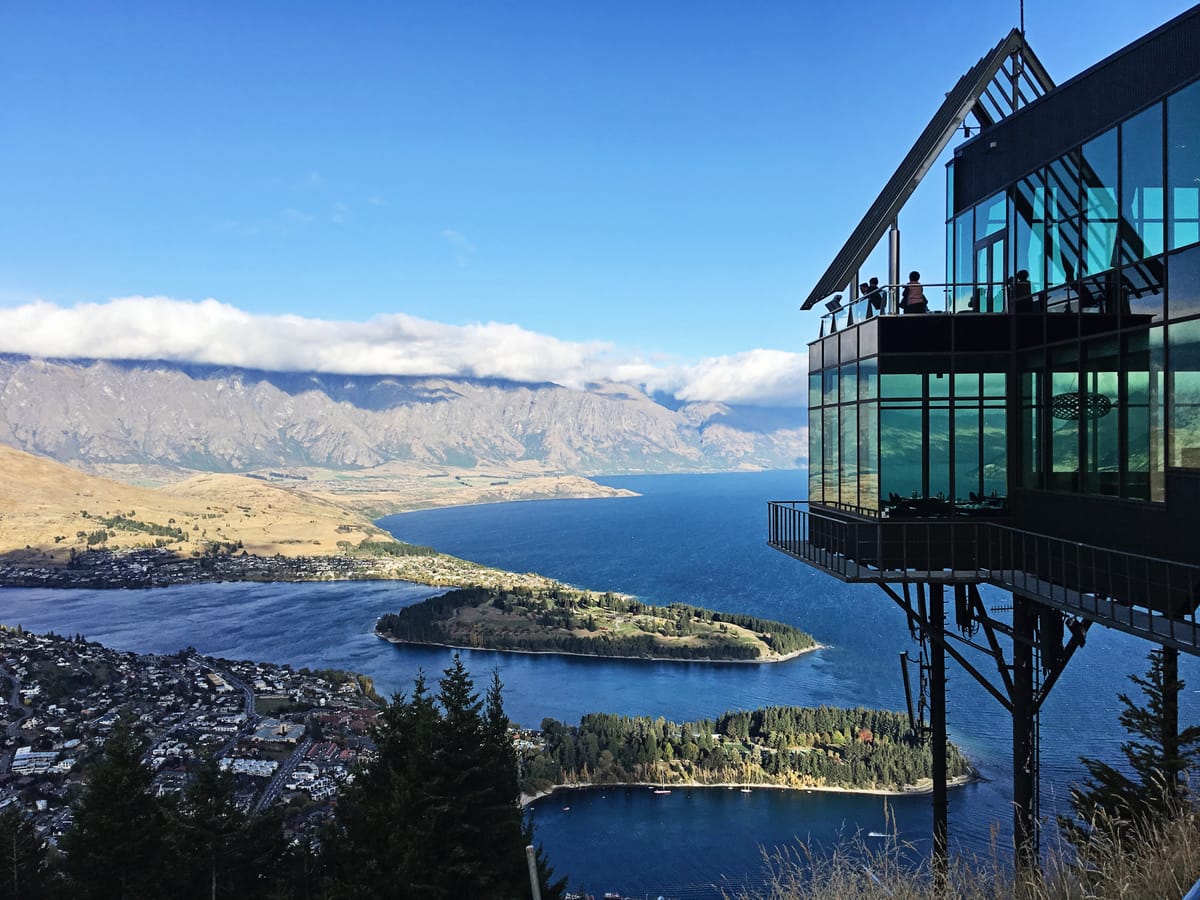

'You don't take a photograph, you make it' - Ansel Adams
A few days ago, a friend asked me a great question: "What actually makes a photograph good?" I gave him my take on it, and later thought — why not turn that question and answer into a blog post?
So here we are.
In this post, I'll talk about one fundamental characteristic of good photographs, and share a simple technique that can instantly improve your shots, no matter what style of photography you’re into. It’s easy to do and surprisingly effective..
So, what is the "One fundamental characteristic" of good photographs?
There are a lot of things that go into making a great photograph, but composition - in my opinion - is one of the most important. It can truly make or break your shot. If you want to instantly level up your photography, start by paying attention to how you frame your images. Good composition draws people in — it makes a photograph more balanced, more engaging, and just plain better to look at. You could have beautiful colors and a fascinating subject, but if the composition is off, the whole image can fall flat. That’s how important composition is — it’s basically the foundation of every good photograph.
Now that we know how important "Composition" is, what exactly is it?
When we talk about composition in photography, we’re really just talking about how everything in your shot is arranged. It’s about where you place your subject, what’s in the background, how the lines and shapes guide your eye, and whether the whole image feels balanced or interesting. Think of it like setting the stage for your photo—good composition helps tell a story or highlight a moment. In street photography especially, it’s what turns a quick snap into something that really grabs attention. And the best part? You don’t need a fancy camera to get it right—any camera will do. All you need is a bit of practice.
So, how do you compose your images better?
For seasoned photographers, composing their images comes without much thought. They have shot so many pictures that good composition comes naturally. For new photographers, good composition can come with practice and by following one rule - that rule is the Rule of thirds.
Use the "Rule of Thirds" to better compose your images.
The Rule of Thirds (aka: The Trick That Makes Your Photos Instantly Better)
If you’ve ever wondered why some photos just look better, even if they’re super simple—chances are, the Rule of Thirds had something to do with it.
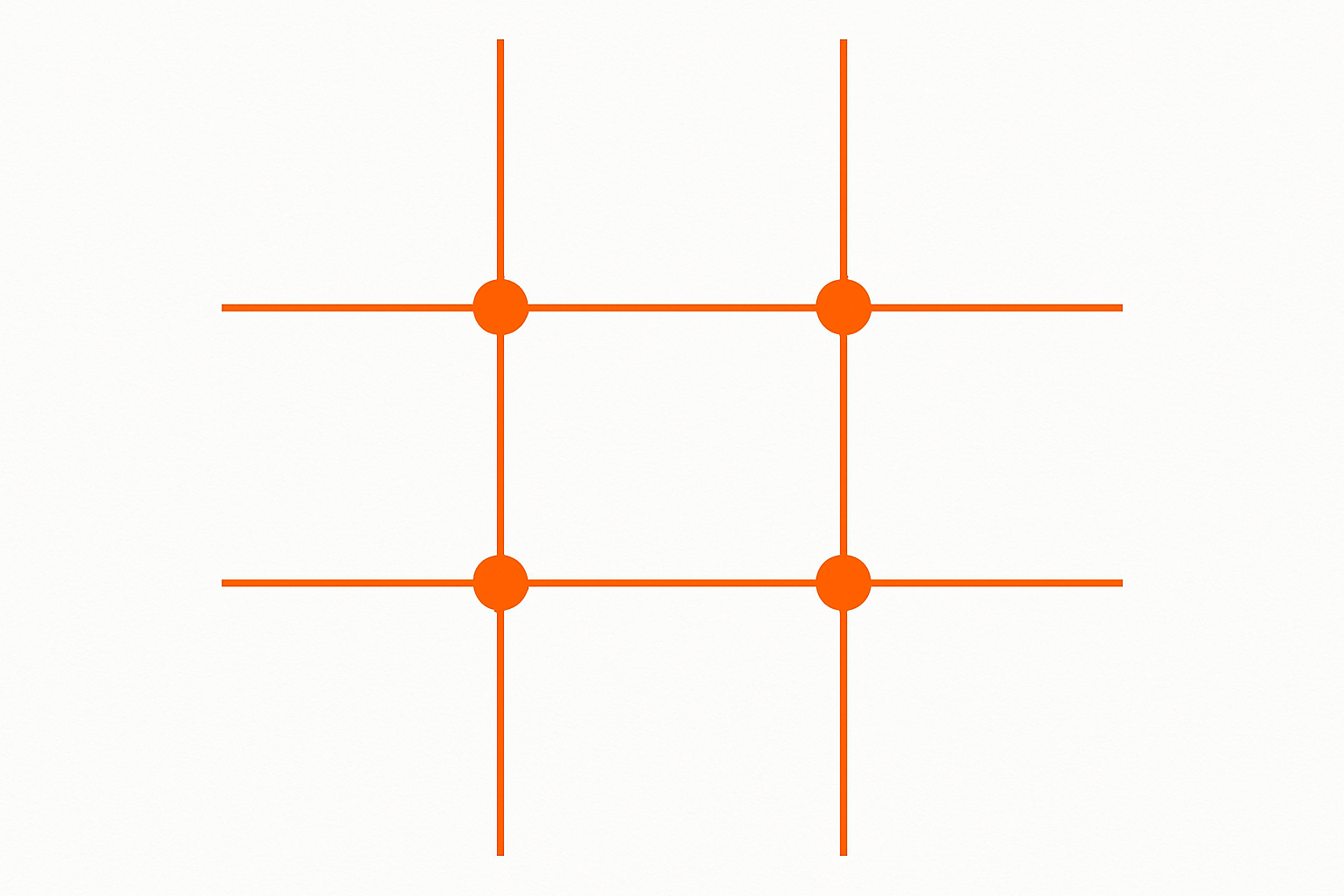
It’s a super easy composition trick. Imagine your photo (or video frame) divided into nine equal parts, like a tic-tac-toe grid. You’ve got two lines going up and down, and two going across. The magic happens where those lines cross—those are your “power points.”
"Dead Center is Deadly"
Instead of plunking your subject smack-dab in the middle, try placing them along one of those lines or at a point where the lines meet. Maybe it’s someone’s eyes, a cool tree, or the horizon line. That little shift makes a big difference—it adds interest, balance, and gives your image a more natural feel.
Why It Works
Our eyes love a bit of structure, but not too much. Perfectly centered images can feel kinda stiff or boring. But when you offset things just a bit—like the Rule of Thirds suggests—you get a nice mix of order and spontaneity.
When to Use It (and When to Break It) - it’s a guideline, not a law.
Use the Rule of Thirds when you want an easy win. Portraits, landscapes, Instagram shots—it works just about everywhere.
But here’s the thing: it’s a guideline, not a law. Once you get the hang of it, you’ll also get a feel for when it’s okay to break the rule and go for something bold and centered or totally off-grid. Some of the most striking images do just that—on purpose.
Rule of Thirds Diagram
Here’s a basic visual of the Rule of Thirds grid:
Here is the Rule of Thirds in use:
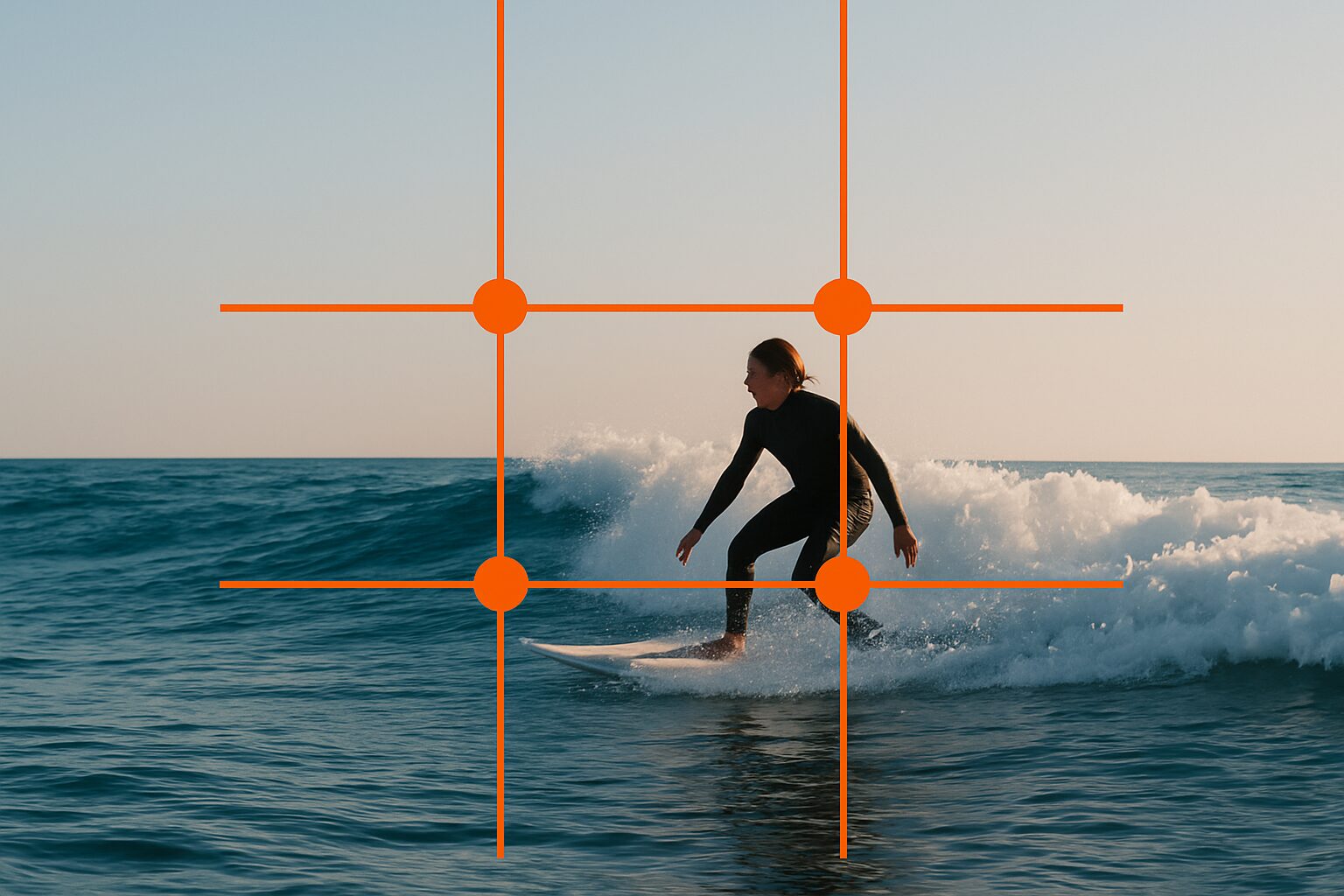
How the Rule of Thirds Is Used in the above image:
In the photo above, you will see the Rule of Thirds being used effectively. The surfer is positioned along the right vertical line of the grid, with their head and upper body landing near one of the key intersection points. This off-center placement instantly makes the composition feel more balanced and visually interesting. It also creates a sense of motion—the space in front of the surfer gives your eye a direction to follow, almost like you're riding the wave with them. This is a good example of how using the Rule of Thirds can add energy, flow, and storytelling to a photo—all without needing any fancy gear or editing tricks.
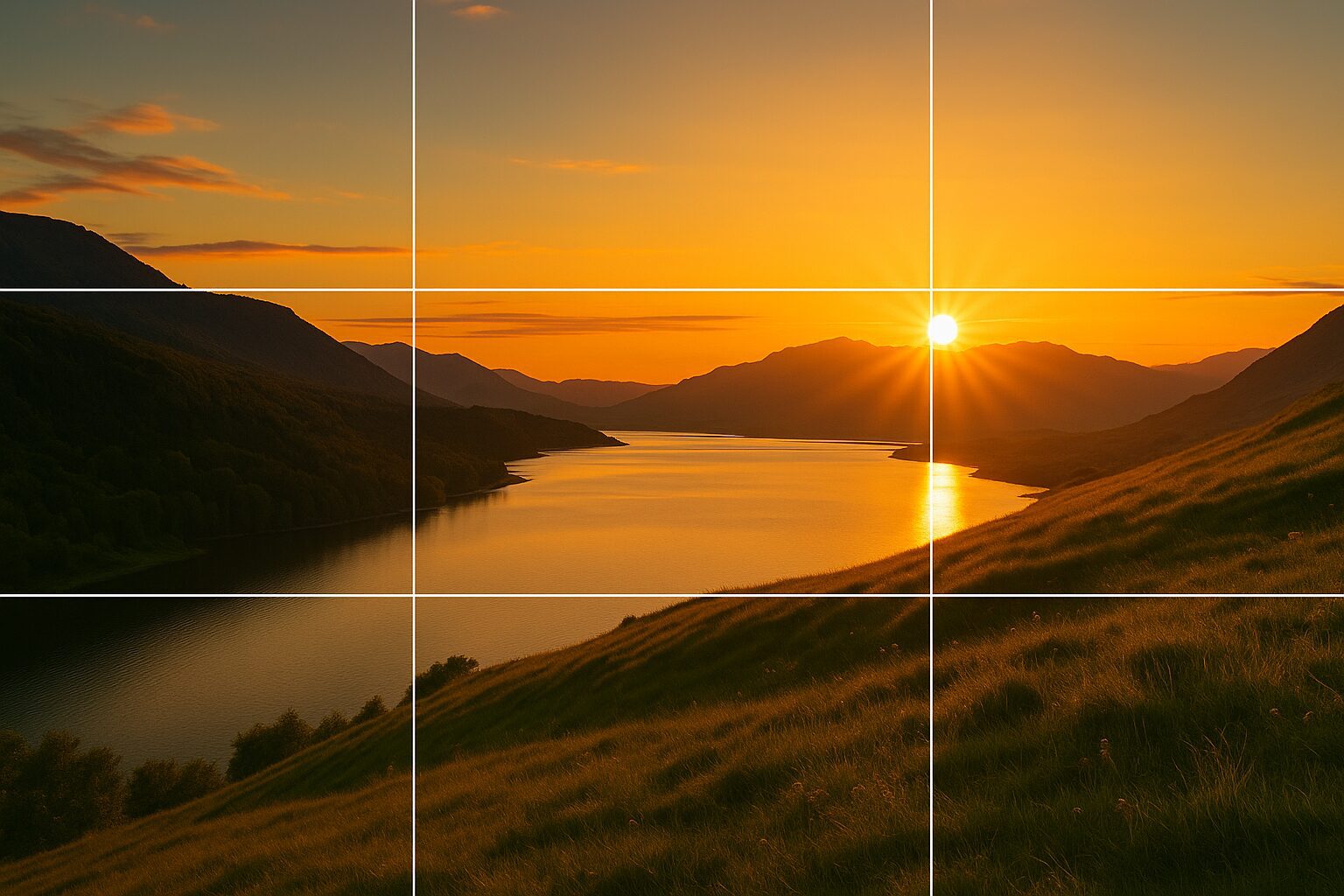
The image above is another great example of why the rule of thirds works so well. Instead of placing the Sun smack in the center, it’s positioned off to the right, very close to where two of those imaginary grid lines would intersect. That simple shift makes the photo feel way more natural and interesting. Your eye doesn’t just land in one spot - it travels through the scene, from the glowing hillside in the foreground, across the calm lake, and out toward the distant mountains. The horizon sits along the upper third of the frame too, which keeps everything feeling balanced without being boring. If the sun were dead center, the whole shot would feel kind of flat. But thanks to the rule of thirds, there’s a nice sense of movement and depth. It’s a simple technique that makes a big difference.

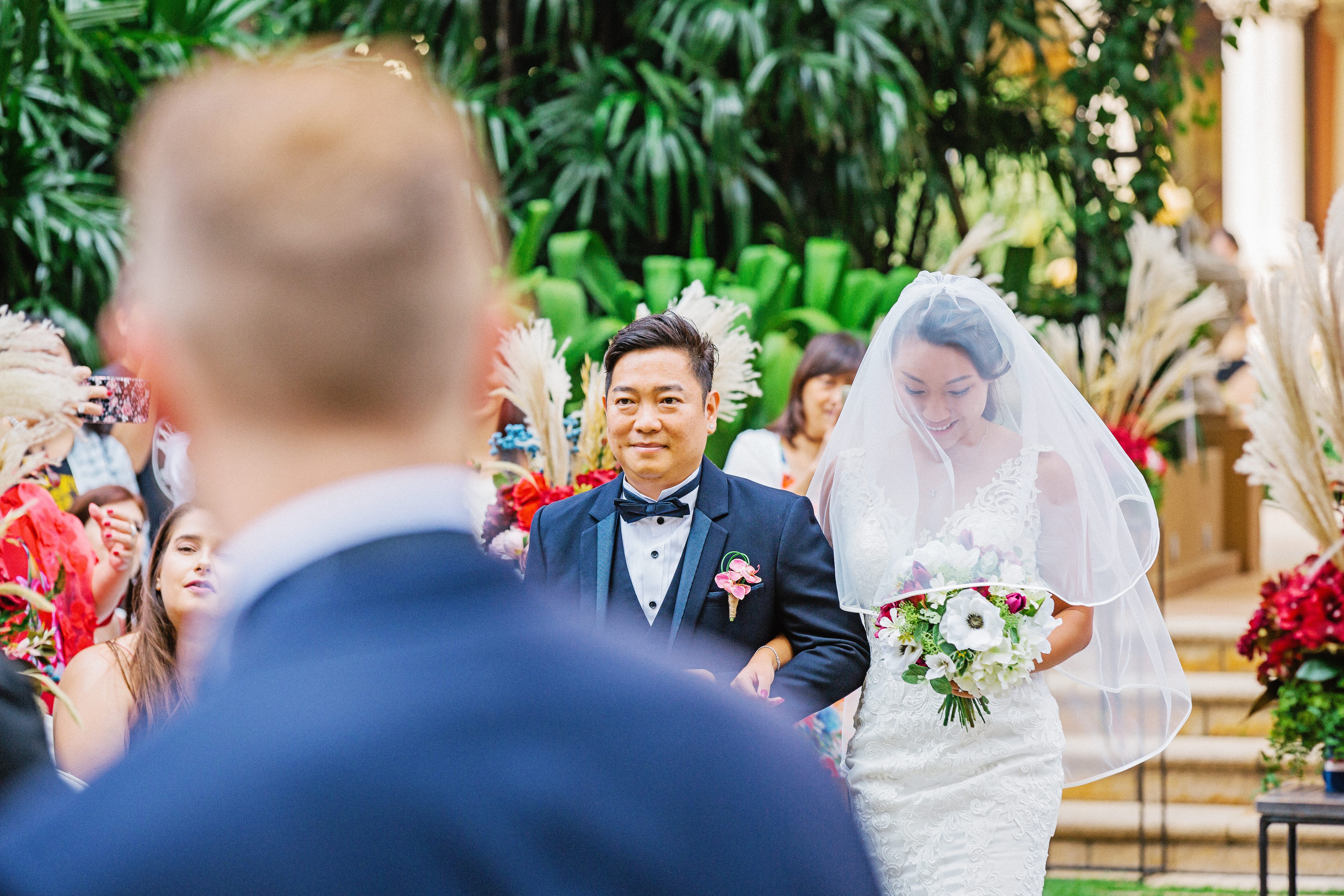
I hope you now have a better understanding of Composition and the Rule of Thirds.
At the end of the day, composition is what gives your photo structure, balance, and impact. It’s the difference between a snapshot and an image that really holds someone’s attention. And how do you start composing your pictures better? By simply using the Rule of Thirds. By using the Rule of Thirds you can instantly improve the way your photos look and feel. You will get better at composing your images with practice and with time you will even be able to break the Rule of Thirds and still shoot very good images. Remember that it is a rule and not the law.
I sincerely hope this post helps you take better pictures. Next time you’re about to take a shot, pause for a second — imagine the rule of thirds grid is on your screen, line things up, compose and see what happens. A small change in composition can make a big difference in your photography.
Tip:
Turn On the Grid for Better Composition
Most smartphones, including iPhones and Android devices, offer a built-in 3x3 grid in the camera settings - perfect for using the Rule of Thirds to improve your composition. On an iPhone, simply go to Settings > Camera and toggle Grid to ON. For Android users, open the Camera app, tap the Settings icon (⚙️), and look for "Grid lines" or "Composition grid", then select 3x3. With this subtle overlay on your screen, you can easily align subjects and horizons for more balanced, eye-catching photos - no fancy camera needed.